
Outdoor Tile and Stone Cleaning in Los Angeles: Patios, Pool Decks and Walkways
Sun, salt air and irrigation water age outdoor tile and stone faster than any indoor surface. Here is how Los Angeles patios, pool decks and walkways are professionally cleaned, restored and sealed to last against the climate.
Why outdoor tile in Los Angeles ages so fast
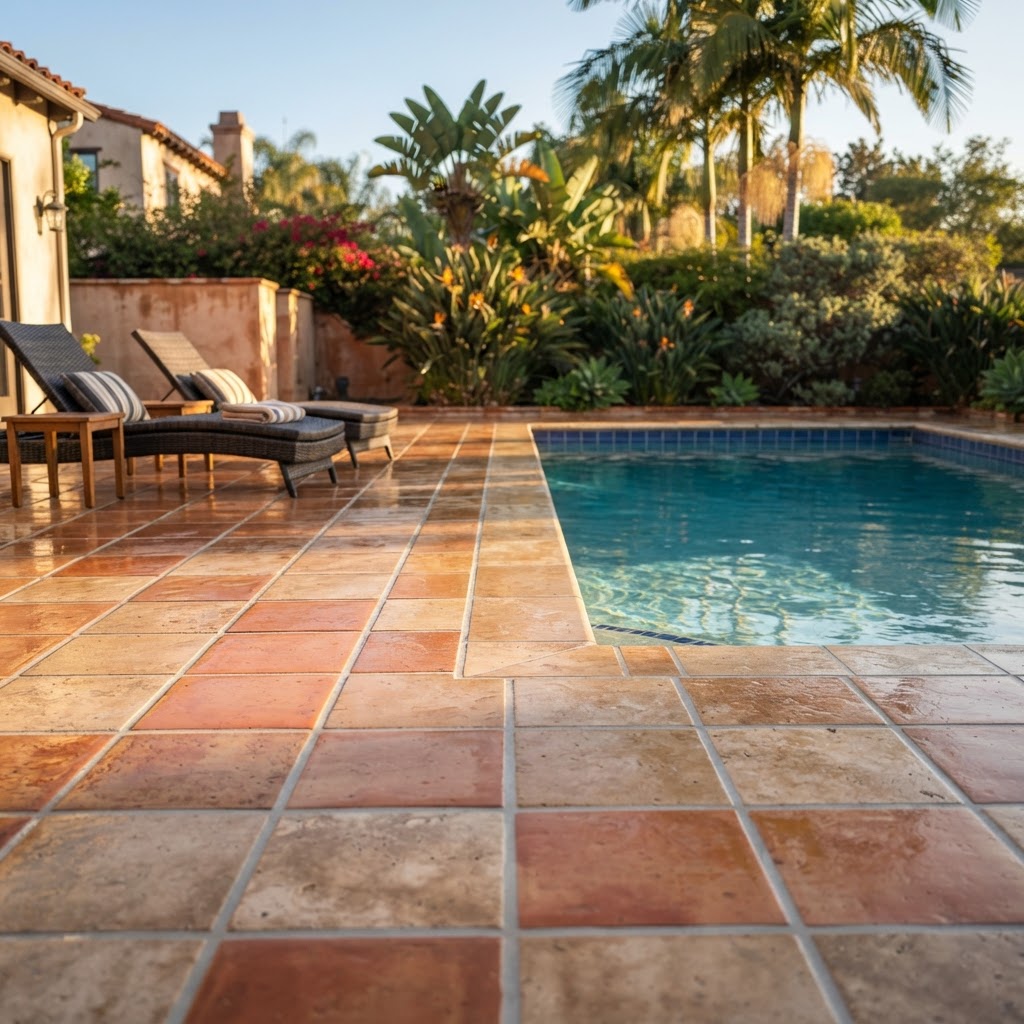
An outdoor tile or stone surface in Los Angeles lives outside the entire year, in a climate that never really stops working on it. Intense UV degrades sealers and finishes far faster than indoors, coastal salt settles into every pore, and the hard irrigation water that keeps landscaping green leaves mineral deposits across patios, pool decks and walkways with every cycle of the sprinklers.
Add foot traffic, potted plants, leaf litter and pool chemistry, and outdoor surfaces accumulate a combination of soil, organic growth and mineral scale that no hose-down will lift. The result is the familiar Los Angeles patio: tiles that have flattened to a uniform haze, grout that has gone dark or green at the joints, and stone that has lost the colour and depth it had when it was laid.
What the sun, salt and irrigation water actually do
Sun is the first culprit. UV breaks down topical finishes and penetrates even sealed stone over time, leaving the surface exposed to staining. On coastal patios in Santa Monica, Malibu and the South Bay, salt air adds a film that bonds to tile and grout and feeds the green and black growth that takes hold in shaded joints and along planter edges.
Irrigation water is the other half of the problem. Los Angeles water is hard, and when sprinklers hit stone or tile and evaporate, they leave calcium behind — the same chalky scale that builds on shower glass, but across an entire patio. Over a season that scale roughens the surface, plugs grout pores and turns a clean deck into a surface that traps soil instead of shedding it.
Cleaning vs. restoration: when a wash is not enough
A pressure wash alone does not restore an outdoor tile or stone surface — in fact, blasting a patio with too much pressure or the wrong nozzle is one of the most common ways these surfaces get damaged. High pressure can gouge grout, etch softer stone, drive contamination deeper into the pores, and strip finish unevenly so the floor looks worse once it dries.
Professional outdoor cleaning matches the pressure, the chemistry and the technique to the material. Calibrated pressure with the right detergent lifts soil, organic growth and mineral film from tile, grout and stone without damaging the surface, and the wastewater is extracted rather than driven into surrounding planters and pools. For surfaces that have gone beyond soil — stained, etched, or coated in failed sealer — restoration adds honing, stripping and refinishing to bring the material back rather than just washing it.
Pool decks and salt-water environments
Pool decks face the harshest combination of all: constant moisture, pool chemicals, bare-foot traffic and intense sun. Salt and chlorine residue etch and roughen stone over time, and the wet-dry cycle around a pool feeds the growth that makes grout slippery and discoloured. A pool deck that has lost its grip is also a safety issue, not just an appearance one.
Restoration cleans the surface thoroughly, removes the mineral and chemical build-up, and applies a sealer suited to constant water exposure. On decks where slip is a concern, an anti-slip treatment can be added to wet areas so a restored deck is safer to walk on wet than it was before.
Sealing for sun, salt and foot traffic
Sealing is what converts an outdoor clean into a lasting result. A sealer suited to outdoor exposure fills the pores of the grout and stone so water, oil and dissolved minerals sit on the surface rather than soaking in — meaning scale and staining wipe away instead of bonding. On natural stone, sealing also slows the UV and moisture damage that would otherwise have the surface dulling again within a season.
Outdoor and coastal surfaces need resealing more often than indoor floors because sun and water break the sealer down faster. Expect a maintenance reseal every one to two years on a sunny patio or pool deck, and sooner on coastal or heavily shaded surfaces where growth and salt are constant.
Keeping outdoor surfaces clean between services
The habits that matter outdoors: adjust sprinklers so they do not spray the patio or deck directly, sweep leaf litter and debris before it stains, and rinse salt and pool splash off the surface rather than letting it evaporate. Clean with pH-neutral products on stone — never vinegar, bleach or acidic cleaners, which etch and degrade both stone and sealer.
Even with good habits, most Los Angeles outdoor tile and stone benefits from a professional clean and reseal every one to two years, with pool decks and shaded, coastal surfaces on the shorter end. If your patio, pool deck or walkway has gone dull, stained or slippery, request a free quote — we identify the material first and clean, restore and seal it the way that surface actually requires.