How to Remove Hard Water Stains from Shower Tile in Los Angeles Homes
Los Angeles water is notoriously hard, leaving chalky white scale on shower tile and grout. This guide explains the safe descaling process for ceramic, porcelain and natural stone, and how sealing keeps showers cleaner between cleanings.
Why Los Angeles showers scale up so fast
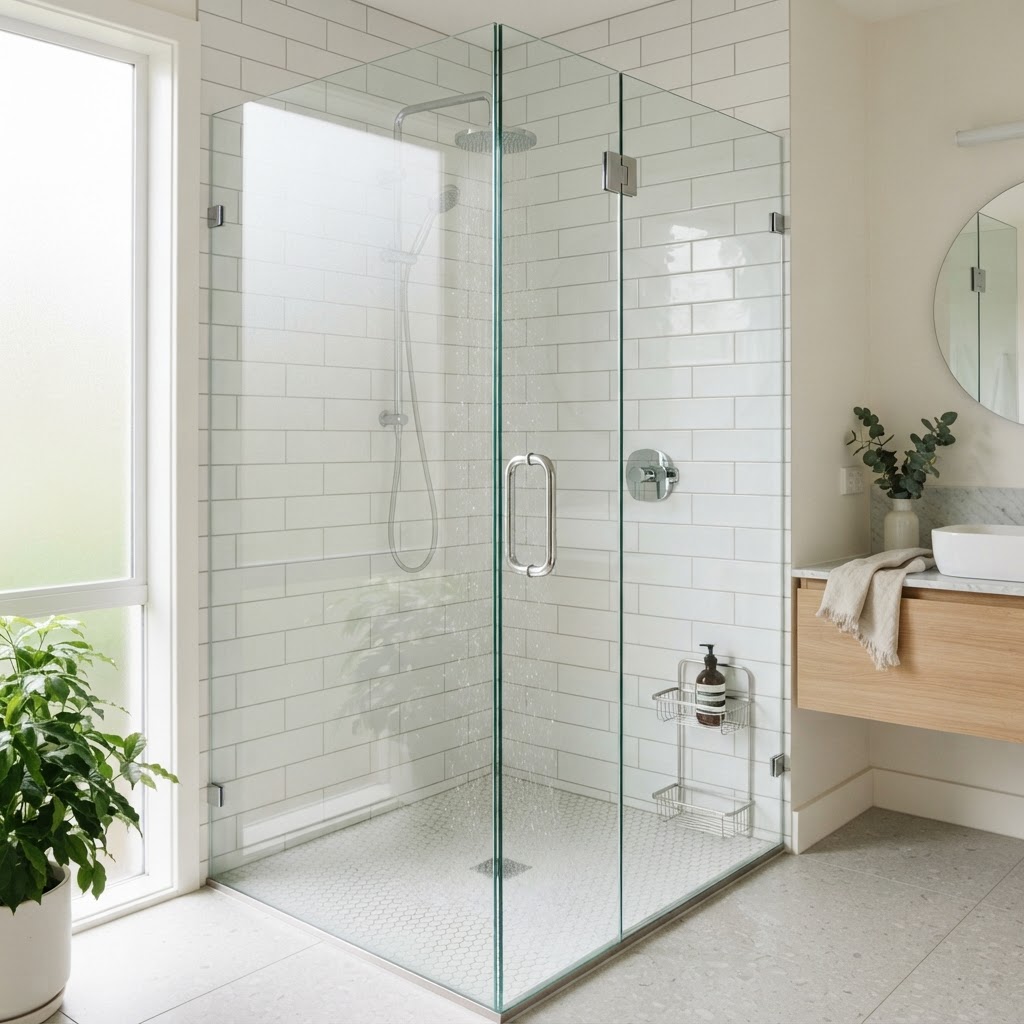
Much of Los Angeles’ water travels hundreds of miles through aqueducts, picking up dissolved calcium and magnesium along the way. By the time it reaches your showerhead it carries a heavy mineral load — and every time water sits on tile, glass or grout and evaporates, those minerals are left behind as a hard, chalky white film.
In a shower that film builds daily. Scale bonds to tile faces, plugs the pores of grout, and etches into polished stone. It also traps soap scum and feeds the pink and dark growths that settle into grout lines and corners. The result is the classic Los Angeles shower: clouded glass, grey-brown grout and a surface that never looks truly clean no matter how often it is scrubbed.
What hard water scale does to grout and stone
Scale is not just cosmetic. On grout, mineral build-up gradually roughens and plugs the joint, making it harder to clean and more hospitable to mould. On natural stone — marble, travertine, limestone — the story is worse: many descaling products are acidic, and acid plus calcite stone equals etching. A homeowner who removes the scale with a supermarket "lime remover" on a marble shower trades the white film for permanent dull chemical damage that only honing will remove.
That is the central rule of hard-water removal: the method must match the material. Ceramic and porcelain tolerate stronger chemistry; natural stone demands pH-balanced, non-acidic treatments and, even then, controlled application.
The safe professional descaling process
Professional shower cleaning starts by identifying every material in the enclosure — tile, grout, stone trim, glass — because a single shower can mix surfaces with very different tolerances. Descaling chemistry is then selected for the most delicate surface present, not the most durable one.
The treatment is applied under controlled dwell times, agitated with tools matched to the surface, and thoroughly extracted and rinsed so no mineral-laden or chemical residue is left in the grout. Soap scum lifts with the scale, and grout lines are detailed individually rather than blasted generally. Once the surface is clean and dry, a sanitizing treatment neutralises any mould or mildew within the grout, and a sealer matched to the material is applied.
Why sealing slows the scale from returning
You cannot make Los Angeles water softer by cleaning the shower, but you can stop the minerals bonding directly to the surface. A sealer fills the pores of the grout and stone so water and dissolved minerals sit on top of the surface rather than soaking in and anchoring — each showering session leaves scale that wipes away instead of scale that must be dissolved out.
Sealed grout also dries faster between showers, which starves mould and mildew of the constant moisture they need. The scale still forms on the tile face — that is physics — but it stays a maintenance issue rather than becoming a restoration project.
Keeping a Los Angeles shower clean between professional visits
Three habits make a dramatic difference between services: squeegee or towel the walls and glass after the last shower of the day so water never evaporates on the surface; run the fan or leave the door open until the enclosure is fully dry; and clean only with pH-neutral products — never vinegar, bleach scrubbers or acidic limescale removers on stone or grout.
Even with perfect habits, most Los Angeles homes benefit from a professional shower clean every 6 to 12 months to strip accumulated scale, sanitize grout and refresh the sealer. If your shower grout has gone dark or the glass has clouded over, request a free quote — we identify the materials first and tailor the process to your shower, not the other way round.